Progress payments and how to protect your deposit
By Nathan Sherry · Updated 2026-08-03
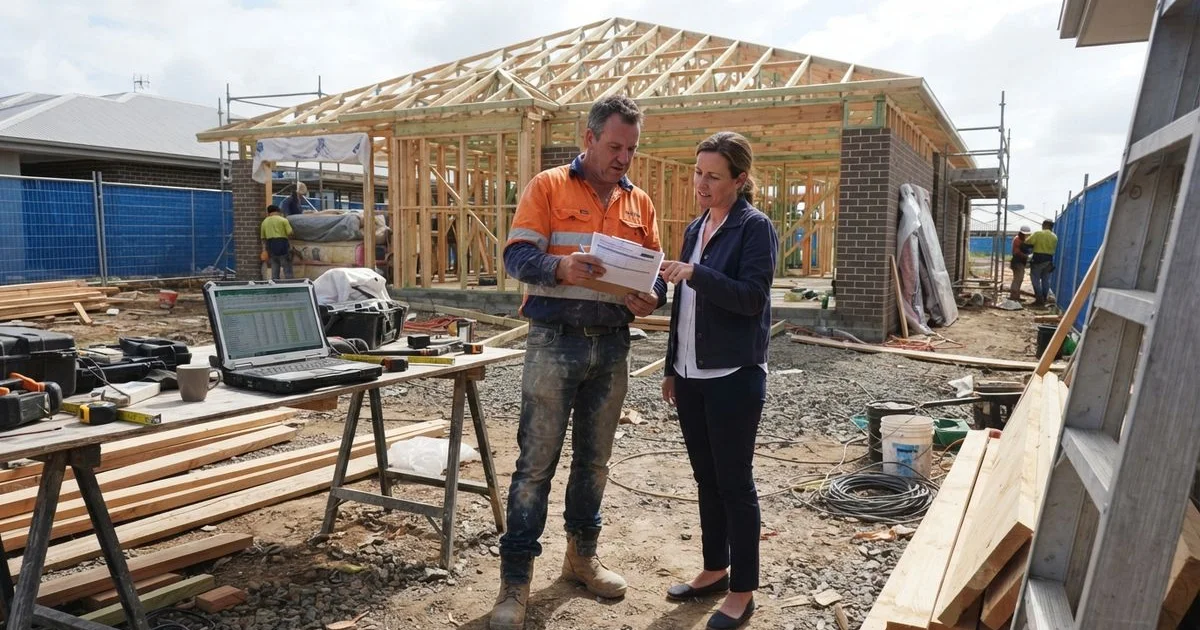
Progress payments are how the money for a custom build actually moves, released in stages as construction reaches defined milestones rather than as one lump sum. Understanding how the schedule is meant to work is one of the more practical ways to protect your money through a project that can run for the better part of a year.
This is general information about how progress payment structures typically work, not financial advice. Confirm the specific rules that apply in your state and read your contract’s payment schedule carefully before signing.
How a typical schedule is structured
Most residential building contracts break payments into stages tied to physical progress: a deposit, then payments at base or slab, frame, lock-up (weatherproof), fixing (internal linings and joinery), and a final payment at practical completion. Each stage is meant to represent a percentage of the total contract value roughly proportional to the work and materials involved in that stage, front-loaded stages, like an oversized deposit or an inflated slab payment relative to the actual work done, are worth questioning.
Why the sequence matters
The whole point of staged payments is that you are never paying significantly ahead of the value of work actually completed. If a builder runs into financial trouble partway through a job, a well-structured payment schedule limits how much of your money is at risk at any point, because you have only paid for stages genuinely delivered. A schedule that front-loads payments, asking for a large sum before site works even begin, shifts more risk onto you.
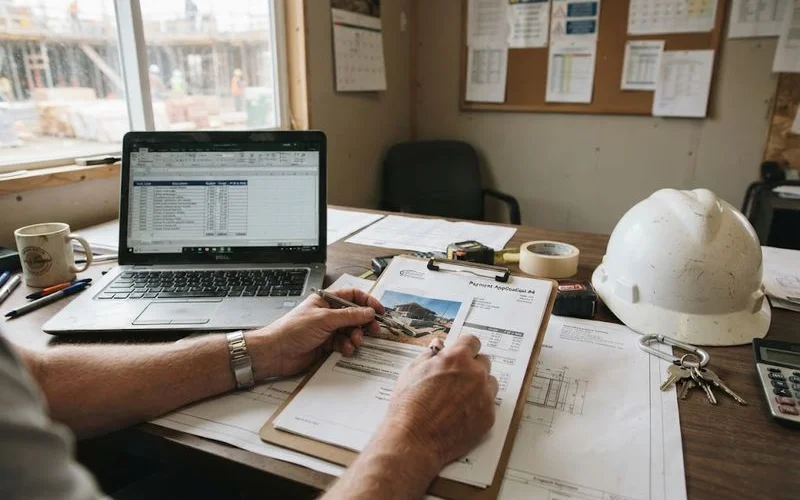
A typical stage breakdown
| Stage | What it usually covers | Reasonable to check before paying |
|---|---|---|
| Deposit | Contract signing, initial design work | Confirm it does not exceed your state’s cap |
| Base or slab | Site works, footings, slab poured | Slab is actually down and cured |
| Frame | Structural frame and roof trusses erected | Frame is standing and inspected |
| Lock-up | Roof, external walls, windows, doors fitted | Building is genuinely weatherproof |
| Fixing | Plasterboard, cabinetry, fittings installed | Internal work matches the invoice |
| Completion | Final finishes, handover | Defects list agreed before final payment |
Protecting yourself along the way
Before releasing any progress payment, physically check or have an independent building inspector check that the stage claimed is genuinely complete. This is a modest cost that can save a great deal of grief if a dispute arises later. Keep every invoice, every photo of the completed stage, and every piece of written correspondence with your builder in one place. If a payment request seems early or out of sequence, ask for a clear explanation before paying, a legitimate builder will not object to the question.
What provisional sums mean for your final payment
Provisional sums and prime cost items, allowances for work or fittings not yet finalised, get reconciled at the end of the job against what was actually spent. Ask your builder for a clear, written reconciliation of every provisional sum before final payment, so you are not surprised by a bill after you thought the project was closed out.
Whether those allowances sit inside a fixed price or a cost-plus contract changes who carries the risk if they run over; our guide on fixed price vs cost-plus contracts breaks down the difference.
If a payment dispute comes up
Most disagreements over progress payments come down to whether a stage was genuinely complete when the invoice was raised. If you disagree with a payment request, respond in writing promptly rather than staying silent, set out specifically what you believe is incomplete, and ask for a joint inspection before you pay. Keeping a simple running log, dates, photos, and who said what, makes this kind of conversation far easier to resolve without it turning into a drawn-out dispute.
The bottom line
A fair progress payment schedule protects both sides: the builder gets paid as work is delivered, and you never pay significantly ahead of what has actually been built. If a schedule looks unusual, heavily front-loaded, vague about what triggers each payment, or missing a clear final reconciliation step, raise it before you sign, not after money has already changed hands.
Reliable scheduling and transparent pricing are among the traits weighed under our published rubric for builders listed on this directory, and both tend to go hand in hand with a payment schedule that is easy to follow.
Common questions
- How much is a typical initial deposit on a custom build?
- It varies by state, since several states cap the maximum deposit a builder can legally request before work starts. Check your state's specific limit rather than assuming a standard figure, and be cautious of any builder asking for more than that cap.
- What are progress payments actually tied to?
- Recognised construction stages: typically base or slab, frame, lock-up, fixing, and completion. Payment at each stage is meant to reflect work that has genuinely been completed and can be inspected, not just time that has passed.
- Should I inspect the work before paying each stage?
- Yes, where practical. Either inspect it yourself or arrange an independent building inspector to confirm the stage is genuinely complete before releasing payment. This is one of the simplest ways to protect yourself during the build.
- What if my builder asks for payment out of sequence?
- Be cautious. Payment requests that jump ahead of completed work are one of the clearest warning signs of cash flow trouble at a building company. Ask for a written explanation and confirm the stage has actually been reached before paying.