Renovate, extend, or build new: how to decide
By Nathan Sherry · Updated 2026-08-06
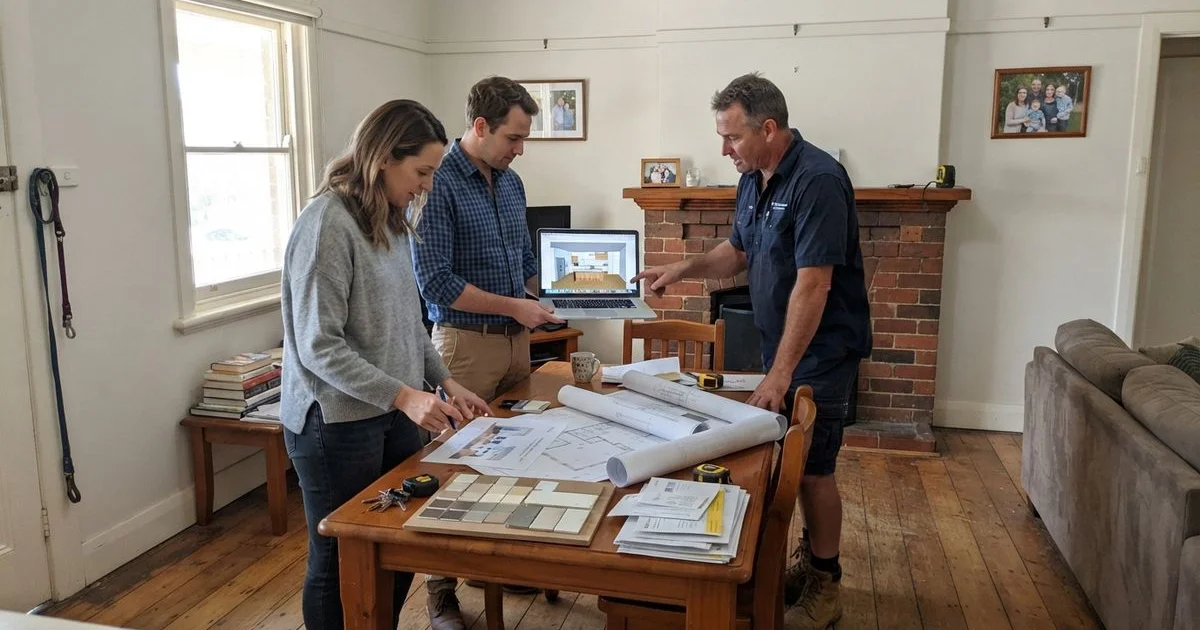
Outgrowing a home does not automatically mean moving. Renovating, extending, or knocking down and rebuilding on the same block are all real options, and each suits a different situation. Here is a practical way to weigh them against each other before you commit to a direction.
The three paths, in plain terms
Renovating works within your existing footprint, updating a kitchen, bathrooms, or layout without adding floor area. It is generally the fastest and least disruptive option, and it can be done in stages if budget is tight.
Extending adds new floor area to an existing structure, a second storey, a rear extension, an additional bedroom wing. It can deliver close to the space of a full rebuild while keeping parts of the original home, but it depends heavily on how well the existing structure can support and tie into new work.
Building new, including a full knockdown rebuild, starts from a cleared site. It costs more upfront in most cases but removes the constraints of an existing structure entirely and gives you a home designed around how you actually live now, not how the original owners lived decades ago.
What actually decides which path fits
The condition of your existing structure matters more than most people expect going in. A structurally sound home with a workable layout is usually a strong renovation or extension candidate. A home with foundation issues, outdated services throughout, or a layout that cannot be reworked without major structural changes often makes a rebuild the more honest option financially, even though the number feels bigger upfront.
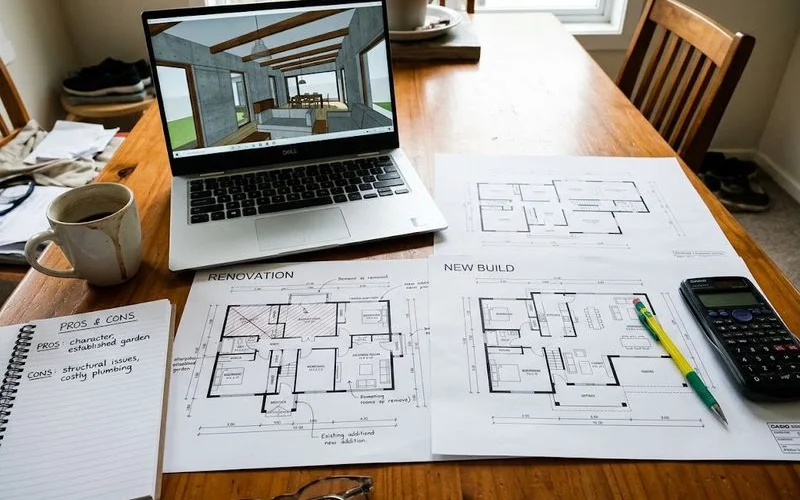
A side-by-side comparison
| Renovate | Extend | Build new | |
|---|---|---|---|
| Typical disruption | Low to moderate | Moderate to high | High, usually need to move out |
| Typical timeline | Weeks to a few months | A few months to a year | Around a year including approvals |
| Keeps original character | Yes, mostly | Partly | No, starts fresh |
| Best suited to | Sound structure, workable layout | Sound structure, need more space | Poor structure, or layout beyond fixing |
The cost trap to avoid
The most common mistake is comparing a partial renovation quote against a full rebuild quote as if they deliver the same outcome. If your renovation wish list keeps growing, new kitchen, new bathrooms, an extra bedroom, updated services throughout, price it against a full rebuild before committing. Sometimes an ambitious renovation ends up costing close to the same as starting fresh, without giving you the same flexibility in the final layout.
Council and site constraints matter too
Even if the budget favours renovating or extending, check what your council actually allows on the site before you fall in love with a plan. Heritage overlays, height limits, and setback rules can restrict what you are permitted to add, sometimes more than they would restrict a full rebuild designed to comply from the outset. On the other hand, a full rebuild resets your obligations under current planning and building codes entirely, which can mean stricter energy efficiency or bushfire requirements that an older, unrenovated home was never held to.
Where to start
Get an independent assessment of your existing home’s structural condition, ideally from a building inspector rather than only the builder who wants the renovation job. Pair that with a rough budget for each pathway, renovate, extend, and rebuild, before you settle on a direction. Seeing the real numbers side by side, rather than assuming which option is cheaper, usually makes the right call for your situation much clearer.
A note on timing
Whichever path you choose, factor in where you will live during the work. Renovations done in stages can sometimes be lived through; a major extension or a full rebuild usually means finding somewhere else to stay for months. That cost, rent, storage, moving twice, is easy to underestimate and worth including in your budget comparison from the start, not added on afterwards as a surprise.
Whichever direction you choose, this directory scores builders and renovators against a published rubric so you can compare track records on a consistent basis, regardless of which type of project you end up committing to.
Common questions
- When does a knockdown rebuild make more sense than renovating?
- Generally when the existing house has structural issues, an impractical layout that cannot be reworked economically, or when the renovation scope needed to get what you want would approach or exceed the cost of starting fresh.
- Is extending always cheaper than a full rebuild?
- Not always. A large, structurally complex extension on an older home can cost more per square metre than new construction, especially if the existing structure needs significant work to tie into the new part.
- Can I live in the house while renovating or extending?
- Sometimes, for smaller cosmetic work. For a major renovation, extension, or any knockdown rebuild, most households need to move out for at least part of the project, which is a real cost to factor in.
- What is the first step if I am not sure which option suits me?
- Get an independent assessment of your existing home's structural condition and a rough budget for each pathway before you commit to a direction. That comparison, side by side, usually makes the right option obvious.