Knockdown rebuild: what to expect during the process
By Nathan Sherry · Updated 2026-08-15
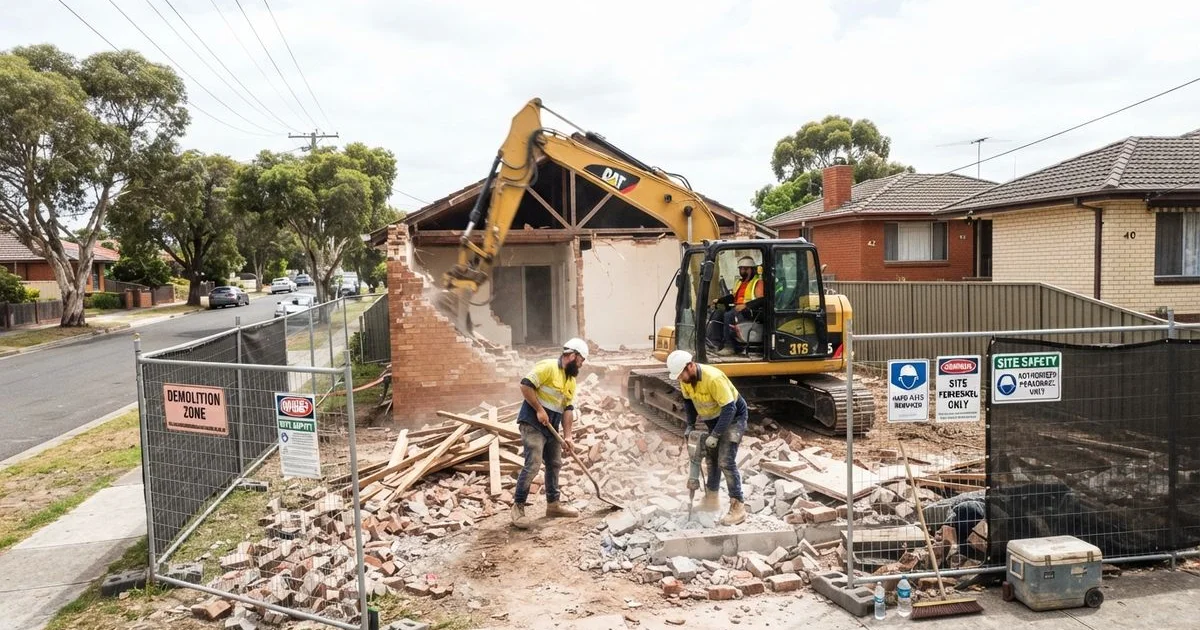
A knockdown rebuild lets you stay on land you already know, often in a location you could not otherwise afford to buy into, while getting a fully new home. It also adds steps a standard new build on vacant land does not have to deal with. Here is what the process actually involves.
Why people choose a knockdown rebuild
The appeal is usually location: staying in an established suburb, near a school catchment, or on a block with an established garden, while replacing a house that no longer works, structurally compromised, poorly laid out, or simply worn out. It is often more expensive overall than buying vacant land and building, once demolition and site clearing are added in, but it avoids the cost and disruption of relocating to a new area entirely.
If you are still weighing a full rebuild against fixing up the existing house, our guide on renovating, extending, or building new walks through how to make that call.
The steps a knockdown rebuild adds
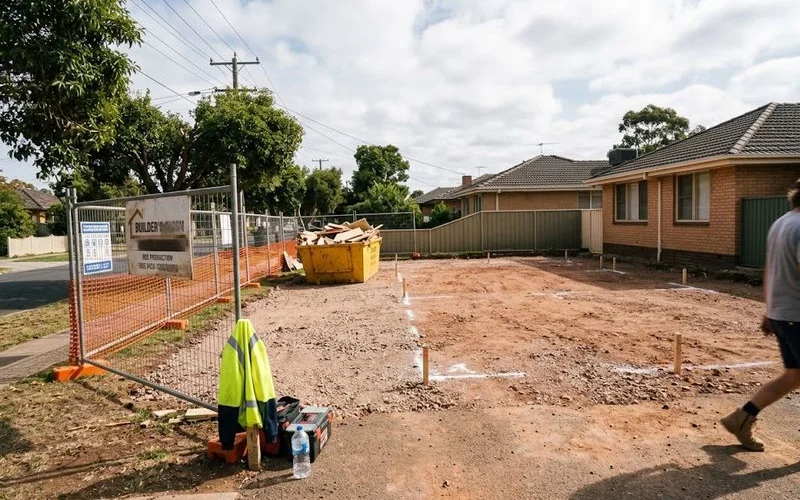
Before any new construction can start, the existing house has to come down and the site has to be cleared and made ready. That typically involves an asbestos assessment (a legal requirement in most areas for homes built before the mid-1980s), disconnecting existing services, obtaining a demolition permit, and the physical demolition and removal of debris. Only once the site is fully cleared does the process converge with a standard new build: site works, slab, frame, and so on.
Knockdown rebuild vs building on vacant land
| Knockdown rebuild | Vacant land build | |
|---|---|---|
| Extra steps required | Asbestos check, demolition permit, demolition | None, site is already clear |
| Typical added cost | Demolition, disposal, asbestos removal if present | Not applicable |
| Location flexibility | Stay in an established, known area | Limited to available land |
| Existing services | Often need disconnection and reconnection | Connected as part of the new build |
What commonly catches people out
Asbestos is the most common surprise. If your existing home was built before the mid-1980s, budget for the possibility of an assessment finding asbestos that needs licensed removal, since retrofitting that cost into a fixed budget after the fact is a common source of blown budgets. Underestimating how long demolition approvals and services disconnection take is the second common trap: people often plan the build timeline as if demolition were instant, when the approval and clearing stage can add real weeks before construction even begins.
What stays and what changes on the block
A knockdown rebuild does not mean starting with a blank slate in every sense. Mature trees, established fencing, and existing driveway access can often be retained if the demolition and site works are planned around them, which can save both money and years of regrowth. It is worth discussing with your builder early which existing site features you want kept, since demolition crews working without that brief will often clear a site more aggressively than necessary. On the services side, existing power, water and sewer connections usually still need to be assessed, since older connections may not meet current standards or capacity requirements for the new home.
Getting the sequencing right
Confirm with your builder early whether they manage demolition directly or coordinate a separate demolition contractor, and get a written combined timeline that covers both stages, not just the construction period. Ask specifically how the asbestos assessment and demolition permit fit into that timeline, and what happens to the schedule if asbestos is found. A builder experienced with knockdown rebuilds should be able to answer this without hesitation, since it is a routine part of the process for them.
Planning where you will live
Because you need to fully vacate before demolition and stay out for the entire build, factor rental accommodation, storage, and moving costs into your overall budget from the start. This is one of the most commonly underestimated costs of a knockdown rebuild, since it runs for the full project timeline, not just a few weeks.
Builders experienced in knockdown rebuilds are listed on this directory alongside the same published rubric used across every category, which is a reasonable starting point when comparing track records for this specific type of project.
Common questions
- Do I need to move out before demolition starts?
- Yes. You need to have moved out and arranged alternative accommodation before demolition begins, and typically for the full construction period afterwards, since the block is not liveable during either stage.
- How long does demolition itself take?
- Physical demolition is often surprisingly quick, sometimes just days for a straightforward house, but site clearing, services disconnection, and any asbestos removal can extend that considerably before the build stage even starts.
- Does my existing house need an asbestos check before demolition?
- Homes built before the mid-1980s commonly contain some asbestos, and most councils require a written asbestos assessment before a demolition permit is issued. If asbestos is found, safe removal by a licensed contractor adds cost and time.
- Can I use the same builder for demolition and the new build?
- Many builders coordinate both, either directly or through a subcontracted demolition company, which can simplify scheduling. Confirm this upfront, since managing two separate contracts yourself adds coordination risk.