Home warranty insurance and defects liability: what protects you
By Nathan Sherry · Updated 2026-07-27

Most custom home builds finish without major issues, but knowing what protects you if something does go wrong is worth understanding before handover, not after. This guide covers two of the main protections available to homeowners in Australia: home warranty insurance and the defects liability period.
This is general information, not legal or insurance advice for your specific situation. Requirements and terms vary by state and by contract, so confirm the specifics with your builder, your insurer, or a solicitor.
What home warranty insurance actually covers
Home warranty insurance is designed to protect you, the homeowner, if your builder cannot finish the job or fix defects, most commonly because the builder has become insolvent, has died, or cannot be located. It is not the same as the builder’s own liability or works insurance, which cover different risks during construction. Requirements for when this cover is mandatory, and the value threshold that triggers it, vary by state, so confirm with your builder whether your project needs it and ask to see the certificate before work starts, not after.
It is worth being clear on what home warranty insurance is not: it is generally not a substitute for the builder actually turning up and doing quality work. It is a backstop for the scenario where the builder simply cannot deliver.
What the defects liability period is
The defects liability period is the window after practical completion during which your builder remains contractually obliged to fix defects that appear. It typically starts the day you get the keys and can run for several months for general items, sometimes longer for structural issues, depending on your state and contract. During this period, the builder is expected to return and rectify problems, rather than you having to pay someone else to fix them.
The two protections compared
| Home warranty insurance | Defects liability period | |
|---|---|---|
| What it protects against | Builder insolvency, death, disappearance | Builder available but work needs fixing |
| Who you claim through | An insurer | Directly with your builder |
| When it typically applies | Any time cover was required, per policy terms | A set window after handover |
| What triggers a claim | Builder cannot or will not complete the work | A defect is identified and reported |
Getting the defects walkthrough right
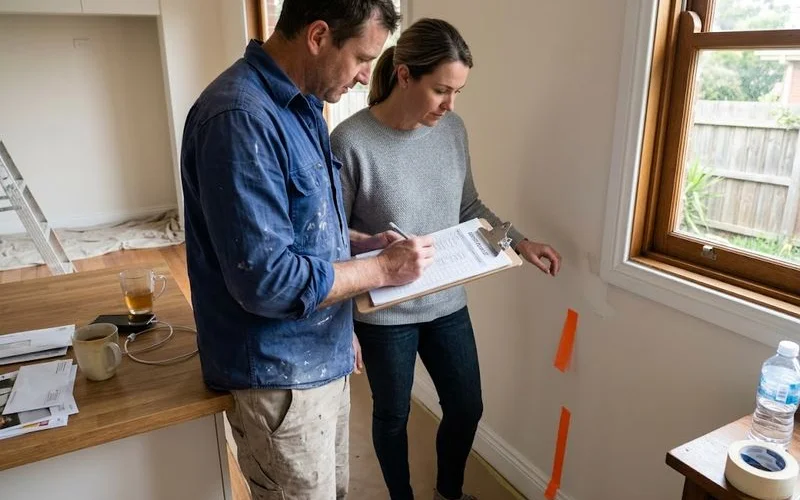
Before your defects liability period starts, walk through the finished home carefully and in good light, ideally with a written checklist. Note anything from cosmetic issues, paint marks, uneven grout lines, to functional ones like doors that do not close properly or taps that leak. Put everything in writing and send it to your builder rather than relying on a verbal conversation. This creates a clear record of what was raised and when, which matters if a dispute comes up later.
If a defect shows up after handover
Document it immediately with photos, a written description, and the date you noticed it. Notify your builder in writing within the defects liability period, since most contracts require this to remain covered. Keep copies of every message. If the builder does not respond or refuses to act, your state’s building regulator or a building disputes tribunal can usually assist, and home warranty insurance may apply if the builder is genuinely unable to complete the fix.
The practical takeaway
Confirm both protections are in place before you sign a building contract, not after a problem appears. Ask your builder directly what defects liability period applies to your contract and whether home warranty insurance is included, and get both answers in writing. It costs nothing to ask, and it gives you a clear reference point if you ever need it.
These protections only come into play once you’re on site; the approvals that get you there, permits, DAs and CDCs, are a separate matter worth sorting out first, and our guide on the building approval process in Australia walks through that sequence.
Prompt defect rectification is one of the sentiment signals we track under our rubric when scoring builders on this directory, since how a business handles problems after handover says as much about them as how the build itself went.
Common questions
- Is home warranty insurance the same as builder's insurance?
- No. Home warranty insurance protects the homeowner if the builder cannot complete the job or fix defects, typically due to insolvency, death, or disappearance. It is separate from the builder's own public liability and works cover.
- How long does a defects liability period usually last?
- It varies by state and by contract, but several months is common for general defects, with a longer period, sometimes years, for structural defects. Check the specific terms in your contract rather than assuming a standard length.
- What should I do if I find a defect after handover?
- Document it with photos and a written description, notify your builder in writing as soon as you find it, and keep a copy of all correspondence. Most contracts require defects to be reported within the liability period to remain covered.
- What if my builder refuses to fix a defect?
- You may be able to make a claim on home warranty insurance, or escalate through your state's building regulator or a tribunal that handles building disputes. Keep every piece of documentation from the start of the build, it becomes evidence if a dispute arises.