Building a custom home step by step: the process and timeline
By Nathan Sherry · Updated 2026-07-13
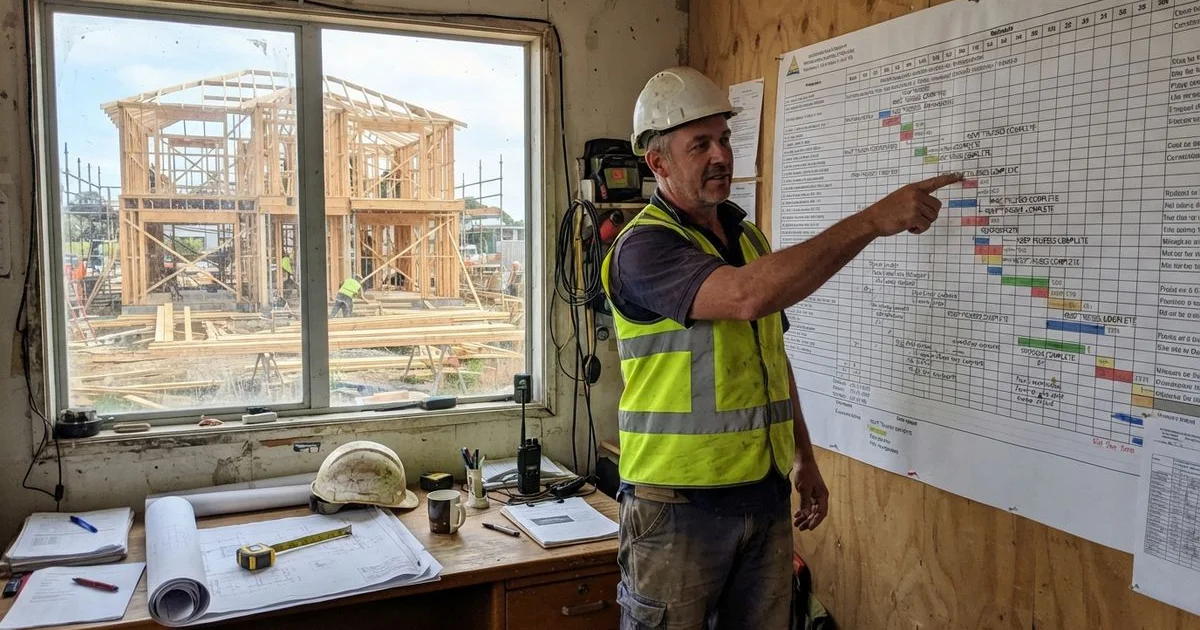
The gap between signing a building contract and getting your keys can feel like a black box if nobody has walked you through it before. Custom home builders in Australia follow a fairly consistent sequence of stages, even though the exact names and payment splits vary by builder and state. Here is what actually happens, in order, and roughly how long each stage takes.
1. Design and documentation
Before a shovel touches the ground, your builder (or an architect, if you have gone that route) turns your brief into working drawings: floor plans, elevations, and enough detail for engineering and council approval. This stage typically runs six to twelve weeks for a straightforward design, longer for anything bespoke or on a difficult site. Site surveys and soil tests usually happen here too, since they feed directly into the structural design.
2. Approvals
Your plans go to council or a private certifier for a building permit, and in some cases a development application, before any construction contract becomes unconditional. Turnaround varies widely by council and by how standard the design is: a straightforward single-storey home on a compliant block can clear approval in weeks, while a complex or non-compliant design can take months.
3. Site works and slab
Once approvals are through and the contract is signed, the builder clears and levels the site, digs and pours footings, and lays the slab (or, on a sloping block, does the cut and fill and retaining work first). This is also when services, power, water, sewer, are connected or extended. Expect two to four weeks here on a straightforward block, longer if the site needs significant earthworks.
4. Frame and lock-up
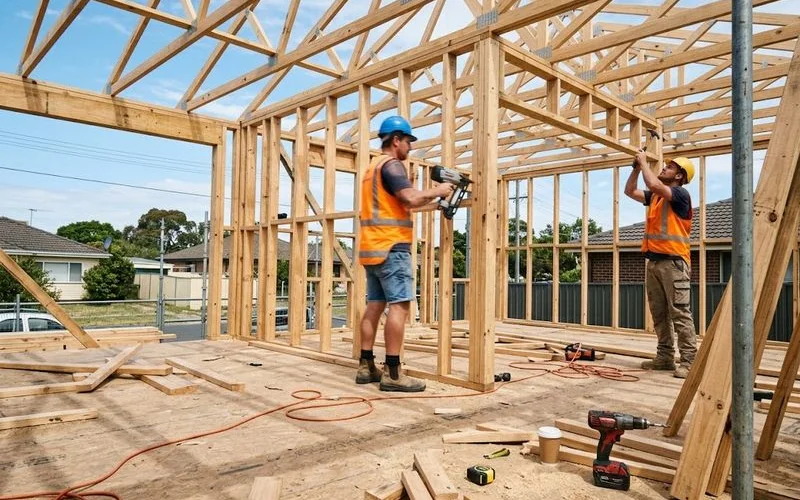
The frame goes up, followed by the roof, external walls, windows and doors, the point at which the house becomes weatherproof, commonly called lock-up. This is usually the fastest-moving and most visually satisfying stage, often four to eight weeks depending on complexity and trade availability.
5. Fit-out
Plumbing, electrical, insulation, plasterboard, then kitchen and bathroom joinery, tiling, painting, and flooring. This is the longest stage on most builds, often eight to fourteen weeks, because so many different trades need to move through the house in sequence without tripping over each other.
6. Practical completion and handover
The builder finishes remaining work, a final inspection happens, and any minor defects get a punch list. Once practical completion is reached, final payment is typically due and keys change hands. From there, a defects liability period begins, usually several months, during which the builder is contractually obliged to fix anything that comes up.
Typical timeline at a glance
| Stage | Typical duration | What to watch |
|---|---|---|
| Design and documentation | 6-12 weeks | Lock in selections early to avoid rework |
| Approvals | 4-16+ weeks | Council turnaround varies a lot by area |
| Site works and slab | 2-4 weeks | Site conditions can blow this out |
| Frame and lock-up | 4-8 weeks | Weather and trade availability |
| Fit-out | 8-14 weeks | The stage most prone to scope creep |
| Practical completion | 1-2 weeks | Walk through with a written defects list |
What speeds a build up, and what slows it down
Builders consistently point to the same two things when a build runs late: changes made by the homeowner after documentation is locked in, and delays outside anyone’s control, like weather or a supplier backorder. On the flip side, the fastest builds tend to be the ones where every selection, tiles, tapware, paint colours, is finalised before the slab is even poured, because it means trades never have to wait on a decision.
If your build is running behind, ask your builder for a written explanation tied to a specific stage rather than a vague timeline update. A good builder can point to exactly what is holding things up and what happens next.
Knowing which questions to ask, and which red flags to watch for, before you sign in the first place puts you ahead of most of these problems; our guide on choosing a custom home builder covers both.
Getting a realistic estimate for your build
Every site and design is different, so treat the ranges above as a planning guide, not a promise. Ask any builder you are considering for a stage-by-stage schedule specific to your project before you sign, and compare it against what they actually delivered on recent jobs. Builders listed on this directory are scored partly on on-time delivery under our published rubric, which is a useful signal when you are shortlisting.
Common questions
- How long does it take to build a custom home in Australia?
- From signing a contract to handover, a single-storey custom build commonly takes around six to ten months on site, plus the design and approval period beforehand, which can add several more months depending on council turnaround.
- What causes the biggest delays?
- Weather, material and trade availability, council approval times, and late changes made by the homeowner after the design is locked in. Locking in selections early is the single biggest lever a buyer has over the timeline.
- Do I need to be on site during construction?
- No, but most builders schedule regular site visits or updates at key stages, such as slab down, frame up, and lock-up, so you can check progress in person.
- What is practical completion and why does it matter?
- It is the point where the builder has finished the work to a usable standard, minor items aside, and it is usually when final payment is due and keys are handed over. It starts the clock on your defects liability period.